
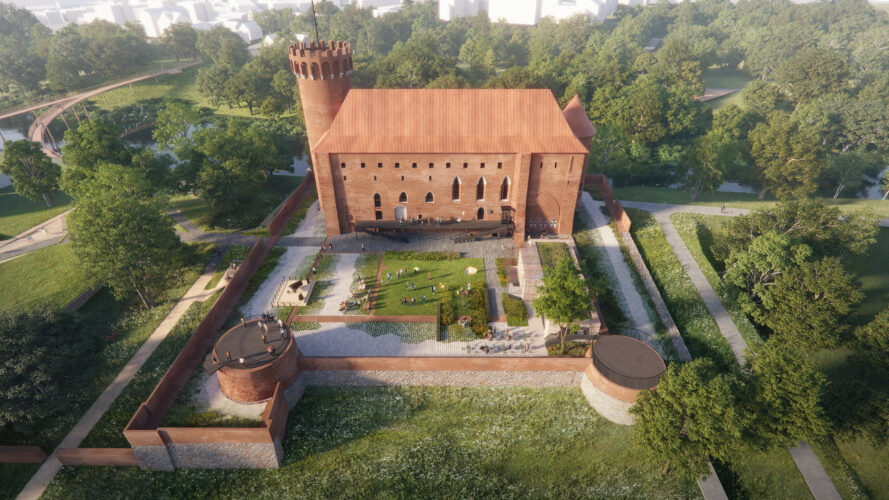
The APA Wojciechowski Architects architectural studio, with The Making as strategic advisor, was responsible for developing a coherent concept. Their analysis is not limited to the castle itself; it also encompasses the city's connections with the market square, Świecie's panoramic view, the vast Vistula River valley, and the Natura 2000 area, which is treated here as an inextricable part of the cultural and natural landscape. The directions for Świecie were developed in accordance with the recommendations of the UNESCO World Conference on Cultural Policy and Sustainable Development; this conference sets the global framework for cultural policy and promotes the integration of culture into the goals of broadly defined sustainable development. In this methodology, culture does not function as a separate sector – on the contrary, it intersects and integrates social, environmental, and economic issues. In Świecie's case, these principles were specifically reflected in the structure of the master plan, both in the formulation of spatial assumptions, the relationship with the Natura 2000 area, and in the construction of the functional program.
As the architects emphasize, "From the beginning of the design work, we adopted a holistic approach. We comprehensively analyzed the viewpoints, connections with the market square, communication, and the landscape of the Vistula River valley, treating Natura 2000 area as a structural asset of the site, not a limitation. We worked on relationships, not objects. Thus, the protected landscape became our design framework. The concept aligns with the latest trends in thinking about heritage after 2030, where culture integrates social, educational, and environmental development. We approached the future of the Teutonic Castle with care and respect for its historical heritage, creating a concept for its development for cultural and artistic purposes, which is an integral part of the master plan. We incorporated modularity into the design – its individual elements will be able to be implemented independently of each other in a coherent manner," explains Szymon Wojciechowski, architect and CEO of APA Wojciechowski Architects.
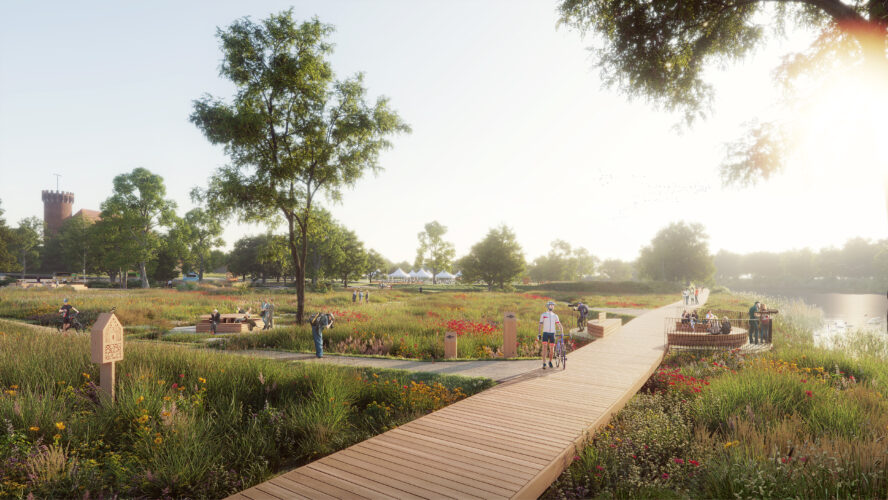
Functional analyses and tests were conducted simultaneously to assess the castle's adaptability. The conclusions confirmed that the historic infrastructure, in addition to its unique historical and architectural values, has its technical and conservation limitations. Therefore, development should be based not only on the fortress itself but also on the surrounding area as an integrated space for various functions. The castle is not treated as a separate product, but as part of a larger puzzle.
The Mayor of Świecie, Krzysztof Kułakowski, points to the strategic dimension of the document. He emphasizes that combining a broad vision with a realistic action plan was crucial: "We wanted not only a holistic approach that organizes the development directions and increases the project's feasibility, but also to develop a coherent narrative that will consistently guide this process over the coming years. On a macro scale, this is a large-scale undertaking – encompassing not only the castle itself but also the entire area of its landscape and functional connections."
As the mayor notes, such a broad perspective had to be translated into a specific implementation structure: "At the same time, we adopted a phased approach. Today, we are focusing on the revitalization of the castle and the development of the recreational areas. Subsequent components will be implemented successively. This division makes the project operationally feasible and eligible for financing from various public programs, appropriate to the scope of individual activities."
In his opinion, however, the foundation of the entire process is a defined philosophy of city development: "We treat cultural activities as an element integrating the city's development – social, environmental, and economic – and that is why we are building a new identity for this place: the castle not as a relic of the past, but as a space for the future."
A key element of the process was the programmatic and strategic aspects, developed in collaboration with the Świecie Cultural Center. Director Monika Tom emphasizes that the selection of partners was conscious and designed for the long term: "We wanted the concept to be prepared by teams experienced in large-scale and responsible projects. That's why we invited APA Wojciechowski Architects, experienced in complex urban and revitalization projects, and The Making, which was responsible for the coherence of the concept and the translation of the city's development goals into the master plan structure."
Monika Tom highlights another dimension of this collaboration: "We needed a document that would last for years – coherent, with clearly defined directions. The integrated work of architects, urban planners, and program experts within a single concept reduces the risk that our ambitions will one day mismatch with real spatial or technical constraints. This development provides us with stability and a lasting foundation for the entire castle area."
The result is a strategy that organizes investment directions, defines a roadmap of activities, and establishes a programmatic framework for the cultural and educational offerings. The masterplan treats the castle area as a system that combines heritage, landscape, education and tourism into one consistent vision of development.
The masterplan treats the castle area as a system that brings together heritage, landscape, education and tourism within a single and consistent development vision. As Michał Grocki, founder of The Making, adds: “The result of this work is a strategy that organises investment directions, defines a map of actions and establishes the programme framework for the cultural and educational offer.”

About the Teutonic Castle in Świecie:
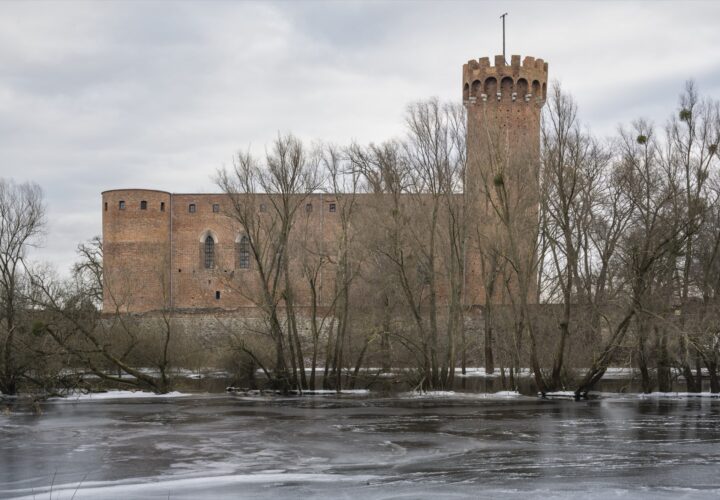
The Teutonic Castle in Świecie, Poland, is a 14th-century fortress located at the confluence of the Vistula and Wda rivers, within the city limits of Świecie. The building is distinguished by its distinctive, almost square plan with corner towers and a leaning main tower, which has become one of its most recognizable features. For centuries, the castle served military and administrative functions, then suffered destruction during the wars against Sweden. Today, it has been partially revitalized and serves as an important landmark in the Vistula Valley landscape and the city's identity. Currently, the castle grounds are part of a long-term development strategy that treats the castle not only as a historical monument, but also as part of a broader system combining heritage, the Natura 2000 area, culture, education, and tourism into a coherent development structure.
About APA Wojciechowski Architects:
APA Wojciechowski Architects has been operating for over 30 years. Currently, the studio employs over 120 architects, and their projects are implemented in Poland, Central and Eastern Europe. Guided by the principles of sustainable development, the office seeks design solutions that deliver the greatest ecological, economic, and social benefits within the budget. APA Wojciechowski Architects is one of the Polish leaders in ecological design, as confirmed by numerous building certificates and green building awards. The studio's most renowned projects include: Elektrownia Powiśle, Skyliner, Skyliner II, Latarnia i Port (Port Praski), The Park Warsaw in Warsaw, Riverview, Format, Officyna, Alchemia in Gdańsk, Kielecka 2 (K2) in Gdynia, The Park Kraków and Centrum Południe, B10 and Business Garden in Wrocław, Hotel Altus Poznań Old Town in Poznań, White Square Office Center and White Gardens Office Center in Moscow, UNIT.City in Kyiv, and Lviv.Tech.City in Lviv.
A team composed of Szymon Wojciechowski, Katarzyna Burny, Kaja Kirilenko, Joanna Karlikowska-Fojt, Hubert Natorff, Anna Proszkuratowa and Matylda Wolska worked on the masterplan and concept for the cultural and artistic adaptation of the Teutonic Castle in Świecie. Renderings: Bartosz Trocha. Photos: Juliusz Sokołowski.
About The Making:
The Making is an independent strategic consulting firm operating at the intersection of real estate, architecture, and the public sector. It supports investors, developers, and institutional stakeholders in asset positioning, market entry strategies, and relationship management to ensure the commercial and communications structure supports the long-term value of the project.